Grill vs Griddle: What Is the Difference?
The difference between a grill and a griddle is the cooking surface: grills use bars or ridges, while griddles use a flat plate. Choose a grill for sear marks or a griddle for pancakes, eggs, and broad browning.
On this page (9 sections)
- What is the difference between a grill and a griddle?
- How does a grill cook food?
- How does a griddle cook food?
- Which foods suit a grill or a griddle?
- What should you check before buying either surface?
- When does a grill and griddle combo make sense?
- How should you set up and use an indoor grill or griddle?
- How do cleaning and care differ?
- How should you choose between a grill, a griddle, and a combo?
The difference between a grill and a griddle is the cooking surface: a grill uses raised bars or ridges, while a griddle uses a flat plate. Choose a grill for sear marks and a griddle for pancakes, eggs, or a broad browned crust.
That choice affects more than appearance. It changes how you handle small ingredients, manage cooking fat, and put a full meal together.
What is the difference between a grill and a griddle?
A grill supports food on bars or raised ridges, while a griddle supports it across a flat surface. Neither shape guarantees better flavor or faster cooking.
An open grill grate exposes food to heat through its gaps, while an indoor ridged plate heats food where it touches the plate. Drippings may collect between ridges or drain into a catch, depending on the design.
A griddle gives batter, eggs, and chopped food continuous support. Fat and juices can stay near the food or move toward a grease outlet.
Fuel matters separately from surface shape. An electric ridged plate won't create charcoal flavor simply because it leaves dark lines.
How does a grill cook food?
A grill creates concentrated contact marks where food touches its bars or ridges. Heat also cooks the food between those contact points, with the result depending on the appliance and its heat source.
Steaks, burger patties, chicken pieces, and thick vegetable slices are easy to handle on a grill. Loose onions or small shrimp need more care, especially over an open grate.
Leave space between pieces so you can turn them without knocking food into gaps. Pat wet ingredients dry before cooking, since surface moisture slows browning.
For setup advice, see how to grill indoors. Our best indoor grills for home kitchens guide helps narrow the appliance choices once you've chosen a ridged surface.
How does a griddle cook food?
A griddle provides broad contact for browning and a level area for foods that would spill through a grate. It's the more useful surface for breakfast, toasted sandwiches, and finely chopped ingredients.
A spatula can slide beneath eggs or pancakes without crossing ridges. You can also gather loose vegetables and move them aside while finishing another ingredient.
The tradeoff is liquid management. Crowding the plate with wet vegetables can leave food sitting in moisture, so cook smaller batches when juices start pooling.
If you want a flat plate plus a ridged option, our guide to indoor grill and griddle combos explains what to compare.
Which foods suit a grill or a griddle?
Choose by how the food needs support and contact, rather than treating meat as grill-only food. Burgers and steaks can brown well on either surface.
| Food or meal | Surface to consider | Why |
|---|---|---|
| Steak or thick burger patties | Either | Choose sear lines or a broad crust |
| Pancakes and loose eggs | Griddle | A solid surface contains batter and eggs |
| Chopped vegetables | Griddle | Small pieces are easy to gather and turn |
| Toasted sandwiches | Griddle | Broad contact browns the bread |
| Chicken pieces | Either | Thickness and heat control matter more than marks |
| Large vegetable slices | Grill | Wide pieces sit securely across ridges or bars |
Plan around the whole meal, too. A flat plate can handle sandwiches and onions together, while a ridged surface may suit chicken with thick zucchini slices.
How does the difference between a grill and a griddle affect burgers?
A grill gives burgers sear lines, while a griddle can form a broader crust across the patty. Choose a flat plate for smashed burgers, since pressing a patty requires continuous support.
The Ninja Sizzle GR101 suits households that want both approaches in one appliance. It includes interchangeable plates, reaches up to 500°F, and weighs 7.8 lb.
Ninja says the perforated mesh lid helps control smoke and reduce splatter. The plates are removable and nonstick, and the detachable mesh lid is dishwasher-safe.
Choose it for mixed breakfast and dinner use when you'll switch plates between meals. Skip it if your main goal is a large breakfast spread served in one batch.
What should you check before buying either surface?
Check usable space, grease handling, and cleanup access before choosing by maximum temperature. A plate needs enough room to turn food, not just fit it edge to edge.
Measure the appliance's footprint and the storage spot for its lid and spare plates. A large cooking surface loses its appeal if carrying the unit makes you avoid using it.
Look for a grease catch you can remove without tipping the appliance. Also check whether the plate lifts out, which parts can get wet, and whether those parts fit your sink.
A higher heat ceiling helps with some searing tasks, but eggs and pancakes need lower settings. Controls that suit your everyday meals matter more than a maximum you'll rarely use.
Is an electric griddle different from a stovetop griddle?
An electric griddle has its own heat source and controls, while a stovetop griddle relies on your burners. A stovetop plate also needs to match your cooktop's size and compatibility requirements.
Electric models take up counter space but leave the stove free. Stovetop plates need storage too, and a plate spanning burners can heat unevenly between them.
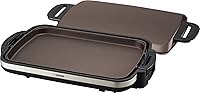
The Zojirushi EA-DCC10 Electric Griddle suits cooks who mainly want a dedicated breakfast and sandwich surface. Its heat settings run from Keep Warm at 176°F to 425°F, and it includes a lid.
Its cooking plate and body guard are fully immersible after disassembly; keep the temperature control plug dry. Follow the cleaning instructions before putting any part in water.
Choose this model if a flat surface covers your regular meals. Skip it if grill marks are a priority, since it doesn't include a ridged plate.
When does a grill and griddle combo make sense?
A combo makes sense when you'll use both surfaces regularly and prefer one powered base. Interchangeable plates still need storage, and swapping them is a between-batch task after the appliance cools.
The Ninja Sizzle Pro XL GX101 suits larger households or meal prep. Ninja describes its capacity as 40% larger than the GR101, with room for 10+ burgers or breakfast for 8–10 people.
It has a 250–500°F control range, ceramic nonstick plates made without PFAS, a detachable ventilated lid, and a removable grease catch. Those features suit cooks who want a broad heat range and removable grease collection.
It measures 20.85 in deep, 15.22 in wide, and 5.85 in high, and weighs 23.2 lb. Skip it if you'll need to lift it from a low cabinet for every small meal.
For another comparison, read indoor grill vs griddle. The grill and griddle combos category has related guides for readers choosing a shared appliance.
How should you set up and use an indoor grill or griddle?
Use a stable, heat-safe surface with ventilation and the clearances required by the appliance's instructions. Fit the plate and grease catch before switching on the heat.
Keep the cord away from hot surfaces and places where someone could catch it. For electric models, follow the connection instructions and avoid overloading an outlet with other high-power appliances.
Preheat before adding food, then use the temperature suited to the meal. Starting pancakes at searing heat can burn the outside before the middle cooks.
Dry ingredients and use only enough cooking oil for the food and surface. Overcrowding lowers the surface temperature and traps moisture, so leave gaps or cook another batch.
Smoke-control lids don't replace ventilation. Our indoor grill ventilation basics guide explains how to plan airflow around countertop cooking.
How do cleaning and care differ?
A flat plate is usually simpler to wipe, while grill ridges need attention in their grooves. Grease channels, catches, and lids add cleaning work on either design.
Unplug an electric appliance and let it cool before removing parts. Don't pour cold water onto a hot plate, since a sharp temperature change can damage cookware.
Use tools and cleaners approved for the surface. For nonstick plates, avoid cutting food on the coating or scraping it with sharp metal edges.
Dishwasher-safe applies to specific parts, not the whole appliance. Empty collected grease as directed, and don't assume a washable lid means the powered base can go in water.
How should you choose between a grill, a griddle, and a combo?
Use the difference between a grill and a griddle to choose the surface your weekly meals need. Then check whether its size and cleaning routine fit your kitchen.
- Pick a grill for larger pieces of meat and vegetables when sear marks matter. Skip a grill-only setup if pancakes, eggs, and loose chopped food dominate your menu.
- Pick a griddle for breakfast, sandwiches, smashed burgers, and small ingredients. Skip a dedicated flat plate if you'll keep wishing for ridged cooking.
- Pick a combo if both surfaces will earn regular use. Skip it if storing and washing an extra plate adds work without solving a real meal need.
For the next step, compare plate sizes and layouts in our indoor grill and griddle guide. Choose enough room for your usual batch, with space left to turn the food.
Frequently asked questions
Is a grill or griddle better?
A griddle is better for pancakes, eggs, sandwiches, and small ingredients; a grill suits larger foods when you want sear marks. Both can brown meat well; choose around your usual meals, then check usable cooking space, grease collection, and how easily you can wash the surface.
Can you cook the same food on a grill and griddle?
You can cook burgers, steaks, chicken, and many vegetables on either surface; the main changes are the browning pattern and how juices collect or drain. Pancake batter and loose eggs need a flat surface, while small vegetable pieces need support to stay above an open grill grate.
Is a grill and griddle combo worth it?
A combo is worth considering if you regularly cook meals that need different surfaces and want one powered appliance. With interchangeable plates, you still need storage for the spare plate; you also need separate batches when a meal calls for both surfaces, unless the appliance supports both at once.
Can you use a griddle as a grill?
A griddle can replace a grill for many meals, including burgers, steaks, and chicken, if you don't need grill marks; its broad contact can create a browned crust. It won't reproduce cooking over an open flame, and excess liquid must be managed so food browns rather than steams.