5 Best Indoor Grill and Griddle Combos (October 2026)
The best indoor grill and griddle combos include the Ninja Sizzle GR101 for everyday family meals, the Ninja Sizzle Pro XL GX101 for feeding larger groups, and the Cuisinart Griddler FIVE for sandwich lovers.
On this page (8 sections)
- Which indoor grill and griddle combos stand out?
- Which plate design fits your cooking?
- How much cooking space should you choose?
- Which heat controls matter for your meals?
- How should you set up a combo before cooking?
- How do you keep plates and grease trays easy to clean?
- Which common mistakes should you avoid?
- Which indoor grill and griddle combo should you choose?
The Ninja Sizzle GR101 is the best indoor grill and griddle combo for most kitchens because it covers grilled dinners and flat-top breakfasts with separate cooking plates. Choose a larger model only if your regular meals need the extra space.
The biggest choice is how you cook, not how many functions appear on the box. Pancakes need a smooth surface, pressed sandwiches need a closing top plate, and eggs beside sausages can benefit from separate heat controls.
If you are deciding between smooth and ridged cooking, read our guide to the difference between a grill and a griddle. For appliances that also handle crisping and roasting, see our guide to indoor grill and air fryer combos.
Our picks at a glance
-
1

-
2

-
3

- 4
 Check it
Hamilton Beach 3-in-1 Grill and Griddle
Best for mixed-temperature meals - 5
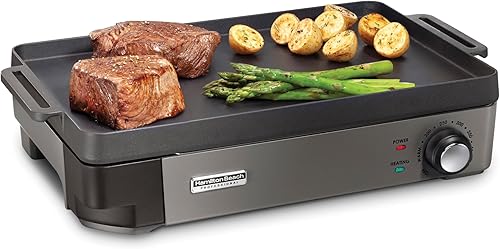 Check it
Hamilton Beach Cast Iron Grill and Griddle
Best for flat-top cooks
Which indoor grill and griddle combos stand out?
The GR101 is the strongest all-around choice, while the other picks solve more specific needs: bigger batches, pressed sandwiches, different heat zones or cast iron flat-top cooking. Choose by the meal you make most often.
NicelySet compared plate designs, cooking space, temperature controls and care needs. The order favors useful grill-and-griddle flexibility, which is why the single-surface cast iron model sits below combos with both plate styles.
| Product | Best for | Plate type | Maximum heat | Dimensions | Our score |
|---|---|---|---|---|---|
| Ninja Sizzle GR101 | everyday family meals | Interchangeable grill and flat-top griddle | 500°F | 14.72 x 15.16 x 6.1 in | 8.9 |
| Ninja Sizzle Pro XL GX101 | feeding larger groups | Interchangeable grill and flat-top griddle | 500°F | 20.85 x 15.22 x 5.85 in | 8.7 |
| Cuisinart Griddler FIVE | sandwich lovers | Reversible grill and griddle with contact cooking | 450°F | 13 x 12.4 x 7.6 in | 7.9 |
| Hamilton Beach 3-in-1 Grill and Griddle | mixed-temperature meals | Two reversible grill and griddle plates | 425°F | 11 x 20.1 x 3.7 in | 7.8 |
| Hamilton Beach Cast Iron Grill and Griddle | flat-top cooks | Single flat cast iron surface | 450°F | 12.8 x 18.9 x 4.3 in | 7.3 |
Ninja Sizzle GR101: Best for everyday family meals
- Interchangeable 14-inch grill and griddle plates
- Maximum heat of 500°F
- Ninja says the plates fit 6 burgers or pancakes for 4–6 people
- Detachable dishwasher-safe mesh lid
A straightforward choice for households that alternate between grilled dinners and flat-top breakfasts. Separate plates suit meals that need one cooking surface at a time.
Pros
- Dedicated grill and griddle plates
- High maximum temperature for searing
- Detachable dishwasher-safe mesh lid
Cons
- Cannot use both plate styles at once
- Less batch space than the Pro XL
Ninja Sizzle GR101: an indoor grill and griddle for everyday meals
The GR101 suits households that want one appliance for breakfast on Saturday and grilled food during the week. Its 14-inch interchangeable plates let you choose a smooth or ridged surface before cooking.
It reaches 500°F, and Ninja says its heating extends evenly across the plate. That high setting gives you room for searing, but it isn't the right starting point for eggs, pancakes or sweet sauces.
Ninja says the surface fits 6 burgers or pancakes for 4–6 people. Treat that as a batch-size guide, since larger portions and space for turning food reduce what fits comfortably.
The nonstick plates remove for cleaning, and the detachable mesh lid is dishwasher safe. You can cook with the lid up or lower it to retain heat and melt toppings.
Buy it for meals built around one surface at a time. Skip it if your usual breakfast needs ridged grilling and smooth griddling together, because changing styles means stopping to cool and swap plates.
Ninja Sizzle Pro XL GX101: Best for feeding larger groups
- Interchangeable 20-inch grill and griddle plates
- Ninja says the plates fit 10+ burgers or breakfast for 8–10
- Temperature control from 250°F to 500°F
- PFAS-free ceramic nonstick plates
The larger plates suit frequent group meals and batch cooking. Choose it when reducing the number of cooking rounds matters more than easy storage.
Pros
- More batch space than the GR101
- ProTemp IQ temperature control
- Detachable ventilated lid and removable grease catch
Cons
- Weighs 23.2 lb
- Needs more counter depth than the other picks
Ninja Sizzle Pro XL GX101: for fewer cooking rounds
The Pro XL suits larger households and cooks who regularly prepare several portions for later meals. Its 20-inch plates provide more room to spread food out rather than crowding a smaller surface.
Ninja says it fits 10+ burgers or a breakfast spread for 8–10 people. That capacity is useful when waiting for a second batch would leave the first batch sitting on serving plates.
ProTemp IQ controls temperatures from 250°F to 500°F. The ceramic nonstick grill and griddle plates are PFAS free, and the ventilated lid detaches for cleaning.
A removable grease catch gives drained fat its own collection point. Plan enough room to reach it without moving the appliance while it is hot.
Buy it when large batches are part of your weekly routine. Skip it for occasional entertaining if storage is tight: its 23.2 lb weight makes frequent lifting a bigger chore than with the GR101.
Like the smaller Ninja, it uses one plate style at a time. Extra cooking space doesn't turn it into a split grill-and-griddle setup.
Cuisinart Griddler FIVE: Best for sandwich lovers
- Contact grill, panini press, full grill, full griddle and half grill/half griddle
- Removable reversible dishwasher-safe plates
- Temperature range from 175°F to 450°F
- LCD display with function, temperature and timer
The closing top plate makes this the strongest match for panini and contact cooking. It also opens for grill, griddle or mixed-surface meals.
Pros
- Panini press and contact-grill functions
- LCD temperature and timer display
- Dishwasher-safe removable plates
Cons
- Lower maximum heat than the Ninja models
- Open cooking needs more room than closed storage
Cuisinart Griddler FIVE: for panini and contact cooking
The Cuisinart suits cooks who want pressed sandwiches as much as open-surface meals. Its closing top plate adds a task that the open grill-and-griddle designs here don't provide.
It works as a contact grill, panini press, full grill, full griddle or half grill and half griddle. Choose the setup before heating so you aren't handling hot plates to change your meal plan.
Temperature control runs from 175°F to 450°F, with a sear function available. The LCD shows the function, temperature and timer, giving you a clear place to check your chosen settings.
Its removable reversible plates and included scraping tool are dishwasher safe. Cuisinart backs the appliance with a limited 3-year warranty.
Buy it for sandwiches and varied cooking positions. Skip it if your main need is the Ninja models' higher maximum temperature or the Hamilton Beach 3-in-1's independent heat zones.
Measure its open cooking position as well as its closed footprint. A unit that stores neatly can still need more working space once the top opens.
Hamilton Beach 3-in-1 Grill and Griddle: Best for mixed-temperature meals
- Two reversible plates with ridged and smooth sides
- Full grill, full griddle or split-surface cooking
- Two independent temperature controls up to 425°F
- 180 sq. in. cooking surface
Independent controls suit meals with foods that need different heat settings. Use both surfaces together, or cook in one zone for a smaller meal.
Pros
- Separate heat controls for each zone
- Grill and griddle cooking at the same time
- Dishwasher-safe plates and top-rack dishwasher-safe drip tray
Cons
- Lowest maximum temperature in this group
- Each surface gets half the space in a split setup
Hamilton Beach 3-in-1: for foods needing different heat
The Hamilton Beach 3-in-1 is the clearest choice when one meal needs two temperature settings at once. Think gently cooked eggs beside sausages, or vegetables cooking separately from a protein.
Its 180 sq. in. surface is divided between two reversible plates. Set both smooth sides up, both ridged sides up, or use one of each.
Each zone has its own control up to 425°F. You can also use one zone for a smaller meal rather than filling both sides just because the space is available.
The plates are dishwasher safe, and the drip tray goes on the dishwasher's top rack. Before buying, check that your sink or dishwasher can handle the removable parts comfortably.
Buy it for mixed meals and separate heat control. Skip it if you want the highest searing setting in this group or a large, uninterrupted surface of each type at the same time.
In split mode, each cooking style gets only half the total area. Plan portions around that division, especially if everyone wants the same grilled main dish.
Hamilton Beach Cast Iron Grill and Griddle: Best for flat-top cooks
- 10 x 16-inch preseasoned cast iron surface
- Adjustable heat from warm to 450°F
- Removable cooktop with grease drain
- Top-rack dishwasher-safe drip tray
Choose this for flat-top cooking and a preseasoned cast iron surface. It is a griddle-focused alternative rather than a combo with separate ridged and smooth plates.
Pros
- Preseasoned cast iron cooktop
- Surface tolerates metal utensils
- Removable cooktop and grease tray
Cons
- No ridged grill plate
- Weighs 22.2 lb and needs cast iron care
Hamilton Beach Cast Iron: for a flat-top routine
The Hamilton Beach Cast Iron model suits cooks who prefer full-surface browning to grill marks. Its 10 x 16-inch preseasoned cooktop is flat, so it is a griddle-focused choice rather than a two-surface combo.
Heat adjusts from warm to 450°F, and Hamilton Beach says the cast iron holds heat better than aluminum. Give the surface time to preheat rather than assuming the selected temperature means the whole plate is ready immediately.
The cooktop tolerates metal utensils and lifts from the base for wiping. Grease drains into a removable tray that can go on the dishwasher's top rack.
Buy it for burgers, vegetables and breakfast foods on cast iron. Skip it if you need a ridged plate, pressed sandwiches or the simple washing routine of removable coated plates.
At 22.2 lb, it also suits a kitchen with a convenient storage spot near the cooking area. Choose it because you want cast iron care and cooking, rather than treating it as a direct substitute for every combo above.
Which plate design fits your cooking?
Choose separate plates for switching between meals, reversible split plates for mixed-surface meals, or a contact design for pressing food. These differences affect your cooking routine more than a long list of functions.
Dedicated plates suit a planned menu
A full grill plate gives you room for several portions of the same grilled food. A full griddle plate provides a broad surface for pancakes, quesadillas or chopped vegetables that need frequent turning.
The tradeoff is changing surfaces between tasks. If breakfast needs both plate styles, finish one part first or choose a split design instead of planning a mid-meal plate swap.
Split plates suit mixed meals
A half-grill, half-griddle arrangement helps when foods need different surface shapes. Ridged and smooth sides can share the appliance without forcing you to choose one texture for the whole meal.
Separate heat controls are a different feature. A split surface alone doesn't mean you can keep delicate food at a lower setting while searing food beside it.
A contact grill suits pressed food
A closing top plate is useful for panini and other foods you want heated from above and below. Match food thickness to the appliance instructions and avoid forcing the lid down over an overfilled sandwich.
For more help choosing surface styles, read indoor grill vs griddle. If you mostly grill and rarely make flat-top meals, compare the broader options in our best indoor grills guide.
How much cooking space should you choose?
Buy enough space for your largest regular meal with room to turn food. An appliance that barely holds all the ingredients can still make dinner awkward if you can't reach or flip them.
Start with a normal menu rather than a head count. Four burgers need a different layout from four chicken portions plus sliced peppers, and long foods can leave gaps that smaller pieces would fill.
Keep ingredients in a single layer when browning matters. Stacking food or filling every gap traps moisture and makes steaming more likely.
Count complete meals, not just burgers
Capacity claims help compare batch sizes, but they don't describe every dinner. A surface filled with the main course leaves no room for side dishes.
Decide whether you want one appliance to cook the whole meal or just the protein. Cooking vegetables elsewhere can make a smaller combo practical without forcing you to buy for rare gatherings.
Measure cooking space and storage space separately
Measure the counter's depth and width, then allow the clearances required by the appliance instructions. Leave a usable landing spot for a plate, a spatula and food waiting to cook.
Check lid movement, access to the grease tray and a safe cord route. Storage also needs room for the spare plate without stacking heavy items against its cooking surface.
For more on shared counters, see our small-space grilling guide. A heavy appliance stored on a distant shelf may get less use than one you can set up easily.
Which heat controls matter for your meals?
Choose independent zones for foods that need different heat, and a higher maximum setting when searing is a priority. Maximum temperature alone doesn't tell you how well an appliance fits breakfast, sandwiches or complete dinners.
Pancakes need controlled browning before their centers finish cooking. Very high heat can darken the outside too soon, while eggs and cheese usually call for gentler heat than a hard sear.
For meat and vegetables, surface moisture matters too. Pat ingredients dry where suitable, preheat properly and avoid adding a crowded pile of cold food.
Match the controls to your cooking habits
A clear temperature display helps you return to a chosen setting. It doesn't replace watching the food, because thickness, starting temperature and the amount on the plate affect cooking time.
Independent controls help when two foods need different treatment throughout the meal. They matter less if you normally cook one main ingredient and prepare sides elsewhere.
Read coating and material terms carefully
Choose a plate material for both cooking and care. A coated surface calls for suitable utensils and gentle cleaning, while cast iron adds drying and seasoning care.
PFAS free describes material composition, not permission to overheat or scrub a surface. Follow the care instructions for the specific plate instead of assuming all surfaces with that label behave alike.
How should you set up a combo before cooking?
Set the appliance on a stable, heat-safe counter with ventilation and clear working room. Read the manual before the first meal so plate fitting, grease collection and lid use are clear.
Wash the removable food-contact parts as directed and dry them before fitting them. Confirm that plates are seated properly and the grease tray is in place before switching on the heat.
Plan the meal before preheating
Choose the plate layout while everything is cool. Put raw ingredients, clean serving dishes and utensils within reach so you won't need to stretch across a hot cooking surface.
For mixed meals, start with the food that takes longest and add quicker items later. Use separate utensils or clean them when moving from raw food to cooked food.
Give the surface time to heat
Follow the preheating directions rather than loading food onto a cold plate. Proper preheating helps food begin browning instead of sitting in released moisture.
Use cooking times as guides, then check doneness with a food thermometer where appropriate. A brown exterior or dark grill marks don't confirm that the center is ready.
Manage smoke at its source
Use kitchen ventilation from the start, especially for fatty foods or higher heat. Keep the grease path clear and remove old residue before the next meal.
A low-smoke design still needs sensible cooking habits. Lower the heat if oil or residue begins smoking heavily, and don't add extra oil simply to create a more dramatic sizzle.
How do you keep plates and grease trays easy to clean?
Clean the cooking surface and grease collection parts after each use, once they have cooled as directed. Leaving grease and food residue behind makes the next meal harder to clean and can increase smoke.
Unplug the appliance before cleaning. Keep the electrical base out of water and use only the cleaning methods allowed for each removable part.
Treat each removable part separately
Dishwasher permission for a lid or tray doesn't automatically cover the cooking plate. Check each component's care instructions instead of treating the whole appliance as dishwasher safe.
Our guide to dishwasher-safe indoor grill plates explains what to check before loading parts. Hand-wash any component whose instructions call for it.
Protect coated cooking surfaces
Use utensils approved for the coating, and avoid cutting food directly on the plate. A knife can damage the surface even when the rest of the meal requires little scraping.
Let warm residue soften using the approved cleaning method instead of attacking it with an abrasive pad. Don't plunge a hot plate into cold water.
Keep cast iron dry
Follow the cast iron cooktop's directions for cleaning and seasoning. Dry it fully after cleaning and maintain its oil layer as instructed.
Preseasoned cast iron still needs care during use. Store the cooktop dry, and avoid leaving wet food or standing water on it after the meal.
Which common mistakes should you avoid?
Avoid crowding, unnecessary maximum heat and rushed plate changes. These habits can spoil results even when the appliance suits your kitchen.
- Choosing by the largest capacity claim: Plan around your actual portions and sides, including room to turn food.
- Confusing a lid with a heated press: A cover that retains heat doesn't provide contact cooking from a hot top plate.
- Swapping hot plates: Finish cooking, switch off and let parts cool as directed before changing the setup.
- Adding sugary sauce too early: Use it toward the end when suitable, since sugars can scorch before thick food finishes.
- Pressing burgers repeatedly: Flattening food during cooking pushes out juices; it isn't a substitute for enough cooking time.
- Covering grease drains: Don't block drainage paths with food, foil or liners unless the manual permits that setup.
- Using the timer as a doneness check: Time helps organize a meal, but food thickness and starting temperature still matter.
Choose one familiar meal for the first use so you can learn the controls and layout. Once that routine feels clear, add mixed foods or larger batches.
Which indoor grill and griddle combo should you choose?
Choose your indoor grill and griddle by the job it must do every week. Use the menu, available counter space and cleanup routine to settle close choices.
- Choose the Ninja Sizzle GR101 for everyday meals that use either a grill or a griddle surface.
- Choose the Ninja Sizzle Pro XL GX101 when larger batches regularly save you a second cooking round.
- Choose the Cuisinart Griddler FIVE when panini and contact cooking belong in your normal meal plan.
- Choose the Hamilton Beach 3-in-1 when foods need different temperatures at the same time.
- Choose the Hamilton Beach Cast Iron when you want flat-top cooking and are happy to care for cast iron.
Before ordering, picture one complete dinner from setup through washing up. If you're still unsure which surface that dinner needs, use the grill versus griddle guide to make that choice first.
Our top 3 picks at a glance
-
1
-
2
-
3
Frequently asked questions
What is the best indoor grill and griddle combo?
The Ninja Sizzle GR101 is the best fit for most households that want separate grill and griddle plates for everyday meals. Choose the Pro XL for bigger batches, the Cuisinart for pressed sandwiches, or the Hamilton Beach 3-in-1 when you need separate heat controls for two foods.
What is the difference between interchangeable and reversible plates?
Interchangeable plates are separate cooking surfaces that you swap into the appliance. Reversible plates have a smooth side and a ridged side, so you turn them over to change cooking styles; models with two reversible plates can also offer a half-grill, half-griddle setup for the same meal.
Can a grill and griddle combo cook different foods at once?
Yes, a split-surface combo can cook different foods at once, but separate surfaces do not always mean separate temperature controls. The Hamilton Beach 3-in-1 has independent controls for its two zones, while the Cuisinart Griddler FIVE offers a half-grill, half-griddle mode without the same confirmed control arrangement.
How much cooking space do I need?
Choose enough cooking space for your normal meal with room to turn food, rather than buying for a rare party. Count the protein and sides you want ready together, then consider their shapes; a surface that holds several small burgers may need multiple rounds for long strips of vegetables.
Do indoor grill and griddle combos need ventilation?
Yes, indoor grill and griddle combos need kitchen ventilation because hot oil, food residue and fatty foods can produce smoke. Follow the appliance instructions for placement and use, and read our indoor grill ventilation guide before choosing a cooking spot; a ventilated lid does not replace an exhaust fan.


