How to Get Charcoal Flavor From an Indoor Grill
An indoor grill that tastes like charcoal can get closer through browning and smoked seasoning, but an electric grill won't fully copy cooking over coals. Choose a grill that fits your meals, preheat it well, and keep food dry for a better crust.
On this page (8 sections)
- How can an indoor grill taste more like charcoal?
- What makes electric-grilled food taste different from charcoal?
- Which cooking steps help create a charred taste?
- What should you check before choosing a grill?
- Can you add liquid smoke or smoked seasoning?
- How should you clean up after high-heat grilling?
- What mistakes make charcoal-style results worse?
- Which indoor grill should you choose for charcoal-style flavor?
An indoor grill that tastes like charcoal needs good browning and a smoky ingredient, but an electric model won't fully copy cooking over coals. Choose for the meals you cook, then use heat, dry food, and restrained seasoning to get closer.
Charcoal cooking combines a browned surface with flavors from burning fuel and drippings. Indoors, treat crust and smoke flavor as separate jobs: the grill builds the crust, while smoked ingredients supply the smoky note.
How can an indoor grill taste more like charcoal?
Use a hot, clean grate and dry food, then add smoke flavor through food-safe ingredients. More visible cooking smoke isn't the goal, and blackened food isn't a substitute for a browned crust.
Pat meat and vegetables dry before seasoning. If you're using a marinade, let excess liquid drain away so it doesn't pool on the cooking surface.
Give each piece room and leave it alone long enough to brown. Moving food too soon breaks contact with the grate, while crowding traps moisture and slows browning.
Start with smoked paprika in a rub or a little liquid smoke in a marinade. Keep other strong seasonings modest at first so you can judge how much smoke flavor the dish needs next time.
What makes electric-grilled food taste different from charcoal?
Electric grills don't burn charcoal, so they can't reproduce every flavor created over coals. They can still make a flavorful crust through browning, with ridges adding darker contact marks.
Marks cover only part of the surface. For burgers or steaks, focus on overall browning and proper doneness instead of turning the food repeatedly to draw a crosshatch.
The smokeless electric grill guide explains common grill styles and smoke-control features. For the cooking sequence, see how to grill indoors.
A smokeless grill can still produce smoke from grease, food residue, or excess marinade. Smoke reduction helps manage cooking, but it doesn't supply charcoal flavor or replace kitchen ventilation.
Which cooking steps help create a charred taste?
Start with a fully preheated grate, then cook in uncrowded batches. Use a setting suited to the food rather than choosing maximum heat for every meal.
- Set the grill on a stable, heat-safe surface with the clearance its manual requires.
- Fit the cooking plate, drip tray, and any shields as directed.
- Preheat according to the manual while you dry and season the food.
- Apply a thin film of suitable oil only where the instructions allow it.
- Place food with gaps between pieces, then let the first side brown before turning.
- Check internal temperature and follow any required rest time.
Thin foods brown and cook through quickly. Thick cuts need more care because the outside can darken before the center reaches a safe temperature.
Use FoodSafety.gov's safe minimum internal temperatures, including required rest times. Color and grill marks can't confirm that the center is safely cooked.
Does a hotter indoor grill taste more like charcoal?
A hotter grate can deepen browning, but heat alone doesn't add charcoal smoke flavor. Choose enough heat to form a crust without burning the seasoning or drying out the food.
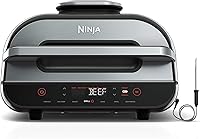
The Ninja Foodi Smart XL DG551 combines a 500°F grill grate with 500°F cyclonic air and an included Smart Thermometer. Its Smart Cook System offers 4 protein settings and 9 customizable doneness levels.
Choose it for steak-centered meals when you want probe guidance, or for a family that will also use its Air Crisp, Roast, Bake, Broil, and Dehydrate functions. Ninja says the grate fits up to 6 steaks, though food size affects how much you can cook without crowding.
Skip it if you mainly want to press sandwiches or cook on a flat griddle. At 25 pounds, it also suits a regular counter spot better than frequent lifting from a cupboard.
When does a contact grill make more sense?
A contact grill suits sandwiches and meals that benefit from heat on both sides. A model that opens flat gives you another layout for foods you need to turn yourself.
The Cuisinart Griddler GR-6SNAS Smoke-Less has reversible grill and griddle plates and temperature control from 175°F to 450°F. Its Smoke-Less mode uses grease-reducing plates, adjustable plate tilt, and temperature control to reduce smoke.
Choose it if breakfast, panini, and grilled dinners all need to share one appliance. Cuisinart says it holds up to 8 burgers when opened flat, so measure the space needed in that position before buying.
Skip it if you specifically want air frying or an included food probe. For a clearer view of what smoke reduction can do, read how smokeless indoor grills work.
Who should choose a grill with a smoke extractor?
A grill with a smoke extractor suits cooks who want smoke reduction alongside open-lid grilling. It still needs proper airflow and clean grease-handling parts.
The Gourmia Smokeless Grill and Air Fryer has a glass lid and grill settings from 400°F to 510°F. You can grill with the lid open or closed and use its Smoke Extractor to help reduce smoke.
Choose it if you want that lid flexibility plus Air Fry, Bake, Roast, and Dehydrate functions. Its preheat and turn reminders also suit cooks who prefer prompts during meal preparation.
Skip it if your available counter space is narrow. Its body measures 15.5 inches deep, 21 inches wide, and 8 inches high, before allowing for the operating clearance required by its manual.
What should you check before choosing a grill?
Choose by cooking layout, usable space, and cleanup, then compare heat settings. A higher maximum temperature won't help if the appliance is awkward to set up for everyday meals.
Think about your usual food first. A contact layout fits pressed sandwiches, an open grate gives access for turning separate pieces, and a grill and air fryer combination adds more cooking options.
Measure both the storage spot and the working area. Include lid movement, space for utensils and a plate, and access to the drip tray rather than judging fit from the appliance body alone.
Don't treat a maximum burger or steak count as a promise for every meal. Large cuts and vegetables need room, and cooking in batches often gives better browning than filling every gap.
If you're still deciding between appliance styles, the best indoor grills for home kitchens provides a broader comparison.
Can you add liquid smoke or smoked seasoning?
Yes, food-safe smoked ingredients add flavor without burning fuel indoors. Smoked paprika works in dry rubs, while liquid smoke can go into marinades or sauces.
Follow the ingredient label because concentrated smoke flavor can overwhelm a meal. Taste a clean portion of sauce before it touches raw meat, poultry, or seafood, and reserve a separate portion for serving.
Add sweet barbecue sauces toward the end of cooking when the recipe allows. Sugar can scorch on a hot grate before the food underneath finishes cooking.
Never add charcoal or improvised smoking materials to an ordinary indoor electric grill. The indoor grill ventilation guide explains airflow and ways to manage cooking smoke.
How should you clean up after high-heat grilling?
Remove grease and food residue after each use so yesterday's drippings don't burn during the next preheat. Switch off, unplug, and let the appliance cool as directed before handling removable parts.
The Ninja's ceramic-coated grate, crisper basket, and cooking pot are dishwasher safe. Cuisinart's nonstick plates are dishwasher safe, as are Gourmia's grate, air fry basket, drip tray, and drip tray cover.
Use tools and cleaning methods approved for each surface. Don't scrape a coated plate with metal or immerse the electrical base, and follow the manual for shields, vents, and extractor care.
Empty and clean grease-catching parts rather than focusing only on the grate. The indoor grill dishwasher guide explains why removable parts and appliance bases need different care.
What mistakes make charcoal-style results worse?
Avoid wet food, crowded plates, and scorched sauce. These are more useful problems to solve than trying to create extra smoke.
- Letting food sit in excess marinade encourages steaming and messy runoff.
- Turning too often interrupts browning.
- Pressing burgers forces out juices instead of adding charcoal flavor.
- Using maximum heat throughout can burn the outside before the center is ready.
- Leaving old grease in the appliance creates unwanted smoke.
- Blocking vents or ignoring lid clearance makes the setup unsuitable.
Stop cooking if smoke becomes heavy or persistent, and follow the manual before restarting. For a shared or compact kitchen, review indoor grills for apartments before choosing a cooking spot.
Which indoor grill should you choose for charcoal-style flavor?
Choose the Ninja DG551 for probe-guided grilling, the Cuisinart for grill and griddle flexibility, or the Gourmia for open-or-closed-lid grilling with an extractor. Buy the layout you'll use most often rather than choosing only by maximum heat.
If you're seeking an indoor grill that tastes like charcoal, expect browned food with a smoky note from seasoning. If flavor from burning charcoal is essential, none of these electric models supplies it.
For steak-focused meals, use the indoor grills for steaks guide to narrow your choice around cooking style and capacity.
Frequently asked questions
Can an indoor electric grill taste like charcoal?
An indoor electric grill can produce browned edges and a seared crust, but it won't fully recreate charcoal flavor; coals add flavor through burning fuel and smoke, while electric grills use heated surfaces or hot air. Combine good browning with a little food-safe smoked seasoning for a closer result.
How do you make an indoor grill taste smokier?
Use a small amount of food-safe smoked paprika or liquid smoke, following the ingredient label; pair that smoky note with dry food and a fully preheated grate so the surface browns. Drain excess marinade before cooking, and add sugary sauces near the end to limit burning.
Can you put wood chips in an indoor electric grill?
Don't add wood chips unless the appliance is specifically designed and approved for indoor smoking with them; burning chips can create excess smoke and a fire risk. Use food-safe smoked seasoning in an ordinary indoor electric grill, and never burn charcoal indoors, even with windows open or a fan running.
Why doesn't my indoor grill make grill marks?
A ridged grate needs enough heat and steady contact with food to leave marks; pat food dry, preheat according to the manual, and leave space between pieces. Let the first side brown before turning, but don't chase darker marks at the cost of overcooking the center.